It’s crab apple season, which means that these abundant fruits are ripening on the branches ready to be made into something delicious. These ancient trees can live up to 100 years old and in some cultures, apples are seen as a sacred fruit, as well as magical fruits in folklore and of course in childhood fairytales. Crab apples are small but mighty as they are absolutely delicious as an ingredient (especially in a cake).
This month we have a delicious foraged Dorset crab apple cake for you to try and it is so easy to make, perfect for a beginner forager and for an amateur baker.

Foraging For Crab Apples: Identification
It is extremely important that you know what you’re looking for when foraging and identification must be taken seriously before trying any wild foods. Ensure to dissect it with a foraging knife and compare the wild food to images/ videos from a reliable foraging source.
What are the identifcation rules of foraging?
The key things to look out for are colours, textures, and the inside of the food to make sure it matches your reliable and accurate source. It is also important to identify the tree it is growing from. When picking the fruit also pick a piece of the bark it’s growing from and the leaves surrounding it to make sure it matches your resources. Fortunately, in this case, crab apples are a beginner’s favourite and are pretty difficult to mistake for something poisonous but always follow the forager’s rule: “if in doubt, leave it out”.


Crab apples are best picked in late summer through to late autumn. These pint-sized beauties are a little smaller than larger cultivated apples, so you are looking out for small round green/red apples with serrated leaves. Generally, they are very tart when eaten raw, however they are delicious when made into a jam, an apple sauce or a delicious Dorset crab apple cake.
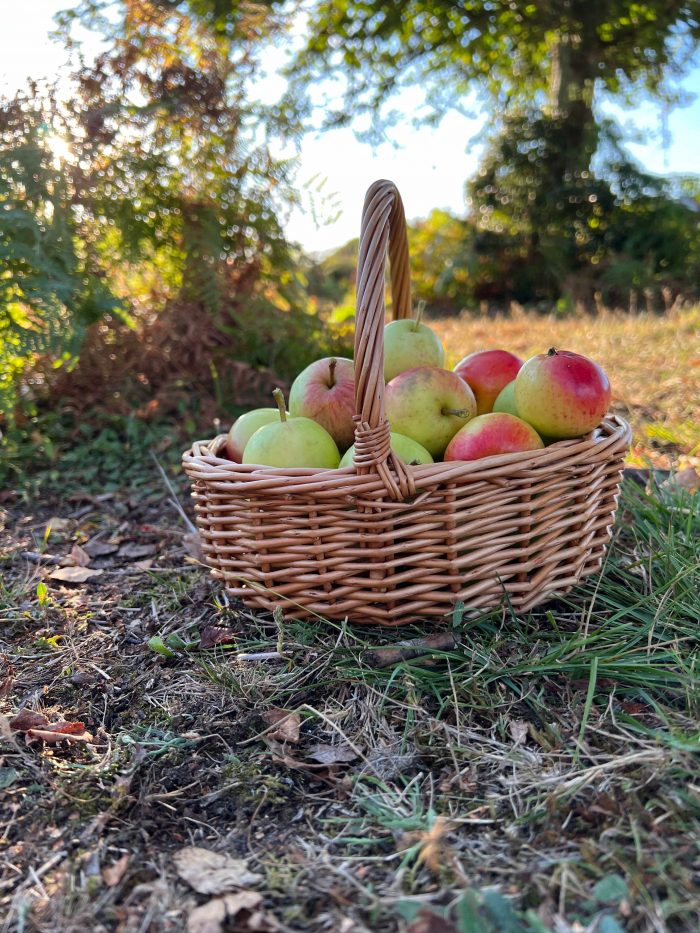
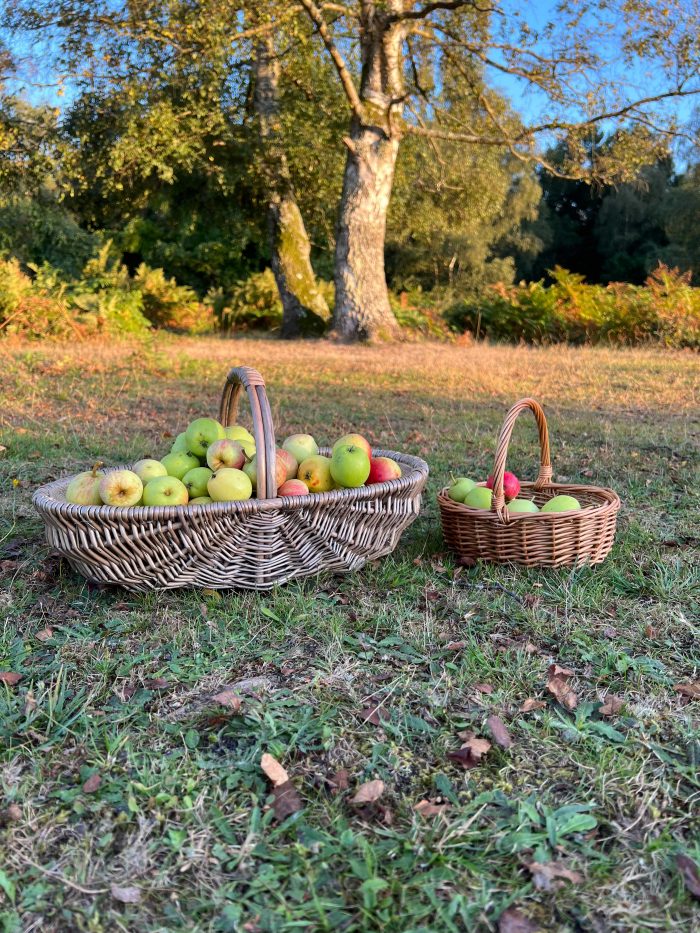
A wicker foraging basket
Always remember to take just enough for the recipe of your choice, do not over forage and leave plenty behind for wildlife. If you are looking for the perfect foraging tool, check out our collection of wicker gardening trugs to help you gather your harvest. We have used our small Antique Wash Wicker Gardening Trug for this job! They are the perfect size for collecting these dainty fruits. If you have children helping you on your adventure, a Children’s Style Wicker Shopper is the perfect tool for little helping hands when gathering your fruits. When you return home from your forage, identify your fruits once more and then wash your fruit and weigh it.
Ingredients for a foraged Dorset crab apple cake recipe
115g unsalted butter, cut into cubes (dairy-free unsalted butter is also fine)
225g of self-raising flour
115g brown sugar
2tsps cinnamon
2 medium eggs
6-7tbsp milk (oat milk is also delicious in this recipe!)
225g cored and diced crab apples (If you don’t have a wild crab apple tree nearby and you would like to use supermarket apples, bramley apples are just fine in this recipe as well)
2 tbsp demerara sugar
100g sultanas (optional)
Method for a foraged Dorset crab apple cake recipe
1. Heat the oven to 180 degrees, gas mark 4 and line a round cake tin (approximately 20cm diameter) with baking paper
2. Core and chop your crab apples. NOTE: Don’t be alarmed that the apples turn brown more quickly than shop bought apples. These are wild apples, so it’s natural that they are likely to oxidise more quickly than cultivated apples
3. Mix the butter and flour into a mixing bowl until it represents fluffy breadcrumbs
4. Add the brown sugar and cinnamon into the mix and beat both eggs into your batter
5. Gradually add your milk in until the batter is smooth and thick
6. Add your chopped apples into the mix and stir. If you are using sultanas, add these into the mix as well.
7. Transfer your batter into your lined cake tin and level the top of the cake evenly
8. Sprinkle on 1tbsp of demerara sugar (save the other tbsp for the end to sprinkle more on top once the cake has baked)
9. Bake for 30 to 40 minutes until your cake is golden brown. For a final test, stick a knife through the middle and when the knife comes out clean, that means it’s ready
10. Allow the cake to cool for 10 minutes on a cake rack and Bon Appetit!
Enjoy this cake warm, with a dollop of ice cream or cream.


If you’re interested in more of our foraged recipes, check out our seasonal Blackberry and Damson Hedgrow Jam Recipe here.
To view a full collection of our wicker baskets, visit our website.
To browse more pages of our journal, click here.
To see what we’re up to on social media, follow us on Instagram here.